Your lawyer should see your Employment Contract in Ontario
A job offer can be exciting, but the contract matters. In Ontario, employment contracts can shape what happens during the job and after it ends.
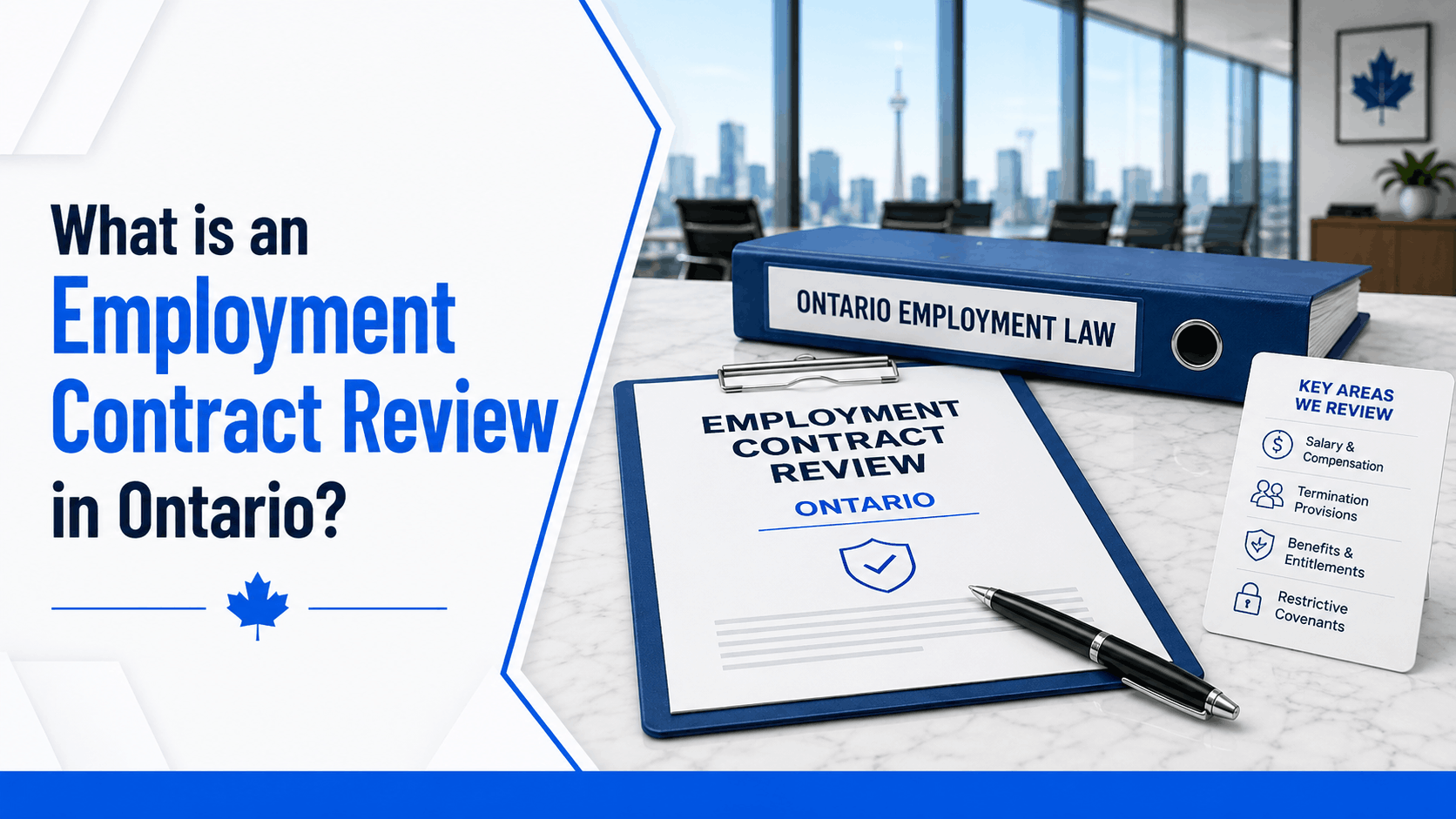
Starting a new job can feel exciting. You may be focused on the salary, the title, the start date, and whether the opportunity feels like a good move. But before you sign the employment contract, it is important to understand what the document actually says. In Ontario, an employment contract can affect your pay, duties, vacation, bonuses, benefits, termination rights, confidentiality obligations, and what happens after the job ends.
An employment contract review is when a lawyer reviews your proposed employment agreement before you sign it. The goal is to help you understand the contract in plain English. It is not just about finding spelling mistakes or checking whether the salary is correct. It is about understanding what rights you may be giving up, what obligations you are accepting, and whether any parts of the agreement create legal or practical risk.
In Ontario, many employment rights come from the Employment Standards Act often called the ESA. The ESA sets minimum standards for many workplace issues, including minimum wage, hours of work, overtime, vacation, public holidays, leaves of absence, termination, and severance pay. However, the ESA doesn't apply to all jobs.
Ontario’s official ESA guide explains that the Act sets rules for areas such as minimum wage, hours of work limits, termination of employment, public holidays, pregnancy and parental leave, severance pay, and vacation. This matters because an employment contract generally cannot take away your minimum rights under the ESA. If a contract tries to give you less than the legal minimum, that part of the contract may be unenforceable. However, contracts can still be written in ways that limit your rights above the minimum, especially if the wording is drafted properly. That is one reason it is important to review the agreement before signing.
One of the most important parts of an employment contract is the termination clause. This clause explains what happens if the employer ends your employment without cause. Many employees assume they will automatically receive a large severance package if they are fired. But a properly drafted termination clause may limit the employee to the minimum notice, termination pay, benefits continuation, and severance pay required by the ESA.
Ontario’s official guidance explains that termination notice rules are meant to ensure employees receive a minimum amount of warning of termination, pay instead of notice, or a combination of both. Ontario also has separate severance pay rules for employees who qualify, which can apply in addition to termination pay in some situations.
This is where Ontario employment law can become complicated. Some termination clauses are enforceable. Others are not. If a termination clause is badly drafted, unclear, or inconsistent with the ESA, it may not properly limit the employee’s rights. In that situation, the employee may be entitled to common law reasonable notice, which can be much more than the ESA minimums. Ontario courts have paid close attention to termination clauses in recent years, so wording matters a great deal.
A contract review can also look at compensation. This includes salary, hourly wages, commissions, bonuses, overtime, expense reimbursement, car allowances, equity, stock options, and other forms of pay. Some contracts make bonus or commission rights depend on strict conditions. Others say that certain payments are discretionary. Before signing, you should understand whether a bonus is guaranteed, discretionary, earned over time, payable after termination, or subject to a separate plan.
Vacation is another important issue. The ESA sets minimum vacation entitlements, but some employers offer more generous vacation rights. A contract review can help you understand whether vacation is being properly described, whether vacation pay is included in salary or paid separately, and whether unused vacation can be carried forward or paid out.
Benefits can also matter. A contract may refer to health benefits, dental benefits, disability insurance, life insurance, pension plans, RRSP matching, or other programs. But the details may be in a separate benefits booklet or policy. It is important to understand whether benefits start immediately, whether there is a waiting period, whether the employer can change the benefits plan, and what happens to benefits if employment ends.
Some employment contracts include probation clauses. A probation clause may allow the employer to end the employment relationship more easily during the first few months. However, a probation clause still has to be understood in light of Ontario employment law and the ESA. Employees should know what the probation period means, how long it lasts, and what rights apply if the job ends during that period.
Another common issue is job duties. A contract may describe your role, reporting structure, hours, work location, remote work arrangement, travel expectations, and whether your duties can change. If the agreement gives the employer broad power to change your role, hours, compensation, or location, that may be important. What looks like a simple flexibility clause can have a major impact later.
Confidentiality clauses are also common. These clauses may prevent you from sharing or misusing the employer’s private information. That can be reasonable, especially if you will have access to customer lists, pricing, financial data, strategy documents, software, trade secrets, or internal systems. But the clause should be understandable, and you should know what information is covered and how long the obligation lasts.
Some contracts also contain non-solicitation clauses. These clauses may restrict you from contacting or doing business with the employer’s customers, clients, suppliers, or employees after you leave. These clauses can affect your future job opportunities, especially if you work in sales, professional services, technology, consulting, finance, or another relationship-based industry.
Non-competition clauses are even more serious. In Ontario, non-compete agreements are generally prohibited for most employees under the ESA, subject to limited exceptions. Ontario’s employment standards materials explain the province’s employment standards rules, and employees should be cautious about any contract language that appears to restrict where they can work after leaving a job. Even where a clause is not enforceable, its presence may still create confusion or pressure, so it is worth reviewing before signing.
An employment contract review can also look at intellectual property clauses. If you create software, designs, writing, inventions, business plans, marketing materials, training content, formulas, or other work product, the contract may say who owns those materials. This can be especially important for developers, designers, writers, engineers, consultants, executives, and anyone with a side business.
Another issue is independent contractor language. Sometimes a company presents an agreement that calls the worker an independent contractor even though the working relationship looks more like employment. This matters because employees and contractors have different tax, benefit, termination, and workplace rights. A contract label is not always the final answer. The actual working relationship matters too.
For executives and senior employees, contract review can be even more important. Senior roles may involve signing authority, fiduciary duties, bonus plans, equity, restrictive covenants, relocation, expense accounts, change-of-control clauses, and more complex termination language. A small wording issue can have a large financial impact.
Employees sometimes feel awkward asking for time to review a contract. But a serious employer should understand that an employment contract is an important legal document. Once signed, it may be difficult to undo. It is much easier to ask questions, negotiate changes, or understand the risk before signing than after a dispute has already started.
Flatly.ca offers Employment Contract Review in Ontario for people who want a clear explanation of a proposed employment agreement before they sign. This can help employees understand termination clauses, compensation terms, confidentiality obligations, restrictive covenants, intellectual property language, and other important parts of the contract.
An employment contract review does not guarantee that every term can be changed. Some employers may refuse to negotiate. But even then, understanding the contract can help you make a better decision. You may decide to sign, ask for changes, negotiate compensation, request clarification, or walk away from a deal that creates too much risk.
A job offer can be exciting, but the contract matters. In Ontario, employment contracts can shape what happens during the job and after it ends. Before signing, it is worth slowing down, reading carefully, and getting help if the language is unclear. A short review before you sign can prevent much bigger problems later.
Legal Disclaimer
This article is for general information purposes only and does not constitute legal advice. It does not create a lawyer-client relationship. Laws and procedures may change. For advice specific to your situation, consult a licensed Ontario lawyer.
Need help with an Ontario legal matter?
Browse transparent flat-fee packages — know the cost before you commit.
Browse All Services