Caring for disabled family after your lifetime in Ontario
A Henson Trust is a special type of trust often used in Ontario estate planning. It is usually created for a loved one with a disability.
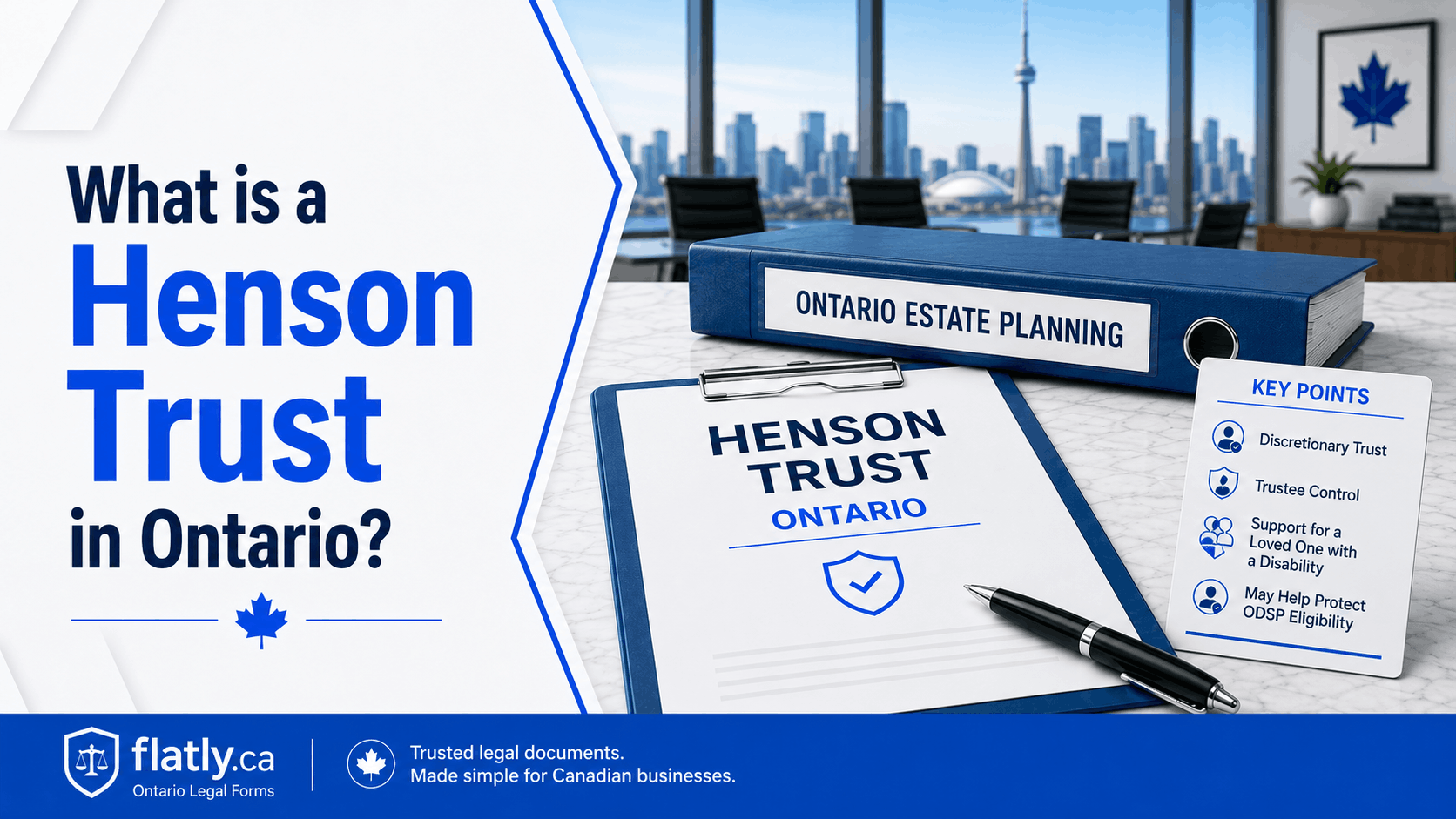
Planning for the future can be stressful for any family. It can feel even harder when you are planning for a loved one with a disability.
A Henson Trust is a special type of trust often used in Ontario estate planning for exactly those types of situations. The goal is to leave money or property for that person’s benefit while reducing the risk that the inheritance will interfere with disability-related benefits, such as the Ontario Disability Support Program, also called ODSP.
Many families want to help a child, grandchild, sibling, or other loved one after they pass away. But if that loved one receives ODSP, leaving money to them directly can create problems. ODSP has rules about income and assets. If a person receiving ODSP suddenly receives a large inheritance in their own name, it may affect their benefits.
That is why Henson Trusts are important. Instead of giving the inheritance directly to the person with a disability, the money goes into a trust. A trustee manages the trust. The trustee decides whether money should be paid out, when it should be paid, how much should be paid, and what it should be used for.
The person with the disability is called the beneficiary. The beneficiary can benefit from the trust, but they do not control the trust money. They cannot demand that the trustee give them money. This is the key feature of a Henson Trust.
The word “discretionary” is very important. In a Henson Trust, the trustee has discretion. That means the trustee has the power to make decisions. The beneficiary does not have a fixed right to receive money. Because the beneficiary does not directly control the trust property, a properly drafted Henson Trust may help protect their eligibility for means-tested benefits like ODSP.
Here is a simple example. A mother has an adult son who receives ODSP. She wants to leave him $150,000 in her will. If she leaves the money directly to him, it may affect his benefits. Instead, her will can say that his share of the estate goes into a Henson Trust. She appoints a trustee to manage the money for him. The trustee can then use the money to improve his quality of life, while being careful about the ODSP rules.
A Henson Trust can be used to pay for things that help the beneficiary live better. This may include clothing, furniture, electronics, recreation, travel, extra support, therapy, special equipment, or other needs. The exact use of the money depends on the trust wording, the beneficiary’s situation, and the rules that apply.
A Henson Trust does not mean the trustee can ignore ODSP rules. Payments from the trust can still matter. For example, how money is paid, what it is used for, and how much is paid can all be important. This is why trustees should be careful and may need advice before making major payments.
The trustee is one of the most important parts of a Henson Trust. This person, or institution, controls the trust property. The trustee must act honestly, carefully, and in the beneficiary’s best interests. The trustee may need to keep records, file tax returns, invest money, speak with professionals, and make careful decisions over many years.
Some families choose a trusted sibling, aunt, uncle, or family friend to act as trustee. Others may choose a professional trustee or trust company. In some cases, it may make sense to have more than one trustee. For example, one trustee may understand the beneficiary personally, while another trustee may have financial or professional experience.
Choosing the wrong trustee can create problems. A trustee who is disorganized, careless, or unfamiliar with ODSP issues may make mistakes. A trustee who has conflict with other family members may also make the situation harder. The best trustee is usually someone who is responsible, trustworthy, and willing to get help when needed.
A Henson Trust may be useful where a loved one receives ODSP, may need ODSP in the future, has a disability, has limited ability to manage money, or may be vulnerable if they receive an inheritance directly. It may also be useful where the family wants to provide support over time instead of giving one large payment all at once.
Henson Trusts are often created by parents for adult children with disabilities. They can also be created by grandparents or other relatives. They are not only for wealthy families. Even a smaller inheritance can cause planning issues if the person receiving it depends on disability-related benefits.
A common mistake is waiting too long. Many Henson Trusts are created as part of a will. If a person dies before proper planning is done, the family may have fewer options. It is usually better to deal with the issue while the person making the will is still alive and able to give instructions.
Another common mistake is using wording that is too simple. A Henson Trust must be drafted carefully. If the beneficiary is given too much control, the trust may not work as intended. If the trustee’s discretion is not clear, there may be problems later.
Families may also forget to coordinate the Henson Trust with the rest of the estate plan. For example, there may be other children, a spouse, a blended family, real estate, business assets, tax issues, or family conflict. There may also be other disability planning tools to consider, such as a Registered Disability Savings Plan, also called an RDSP.
A Henson Trust is not always needed. In some situations, another planning option may be better. In other situations, a direct gift may be acceptable if the amount is small or if the person does not receive means-tested benefits. The right answer depends on the facts.
This is why legal advice matters. A Henson Trust is not just a basic document. It is a legal structure that needs careful thought. The lawyer needs to consider the beneficiary’s needs, ODSP issues, trustee powers, tax concerns, family circumstances, and what should happen to the money after the beneficiary dies.
For simpler situations, the planning may be fairly straightforward. For more complex situations, more work may be required. Complexity can arise where there are multiple beneficiaries, blended families, high-value estates, uncertain ODSP status, questions about capacity, family disputes, corporate assets, real estate, or the need to coordinate with accountants, financial advisors, disability support workers, or other professionals.
The main purpose of a Henson Trust is simple. It allows a family to support a loved one with a disability without simply handing that person an inheritance directly. It can help protect the person’s long-term stability, while giving the trustee flexibility to respond to changing needs over time.
For many families, this is about peace of mind. Parents and other loved ones want to know that the person they care about will have support after they are gone. A Henson Trust can be one way to do that.
Flatly.ca offers a Henson Trust service for Ontario families who want professional help preparing this type of estate planning document. A properly drafted Henson Trust may help protect a loved one’s financial future while reducing the risk that an inheritance will interfere with important disability-related benefits. Because every family is different, it is important to get legal advice before deciding whether a Henson Trust is the right fit.
Legal Disclaimer
This article is for general information purposes only and does not constitute legal advice. It does not create a lawyer-client relationship. Laws and procedures may change. For advice specific to your situation, consult a licensed Ontario lawyer.
Need help with an Ontario legal matter?
Browse transparent flat-fee packages — know the cost before you commit.
Browse All Services