Help Completing a Human Rights Application in Ontario
Learn what an HRTO application is, what information it should include, and why self-represented applicants may want help organizing their form.
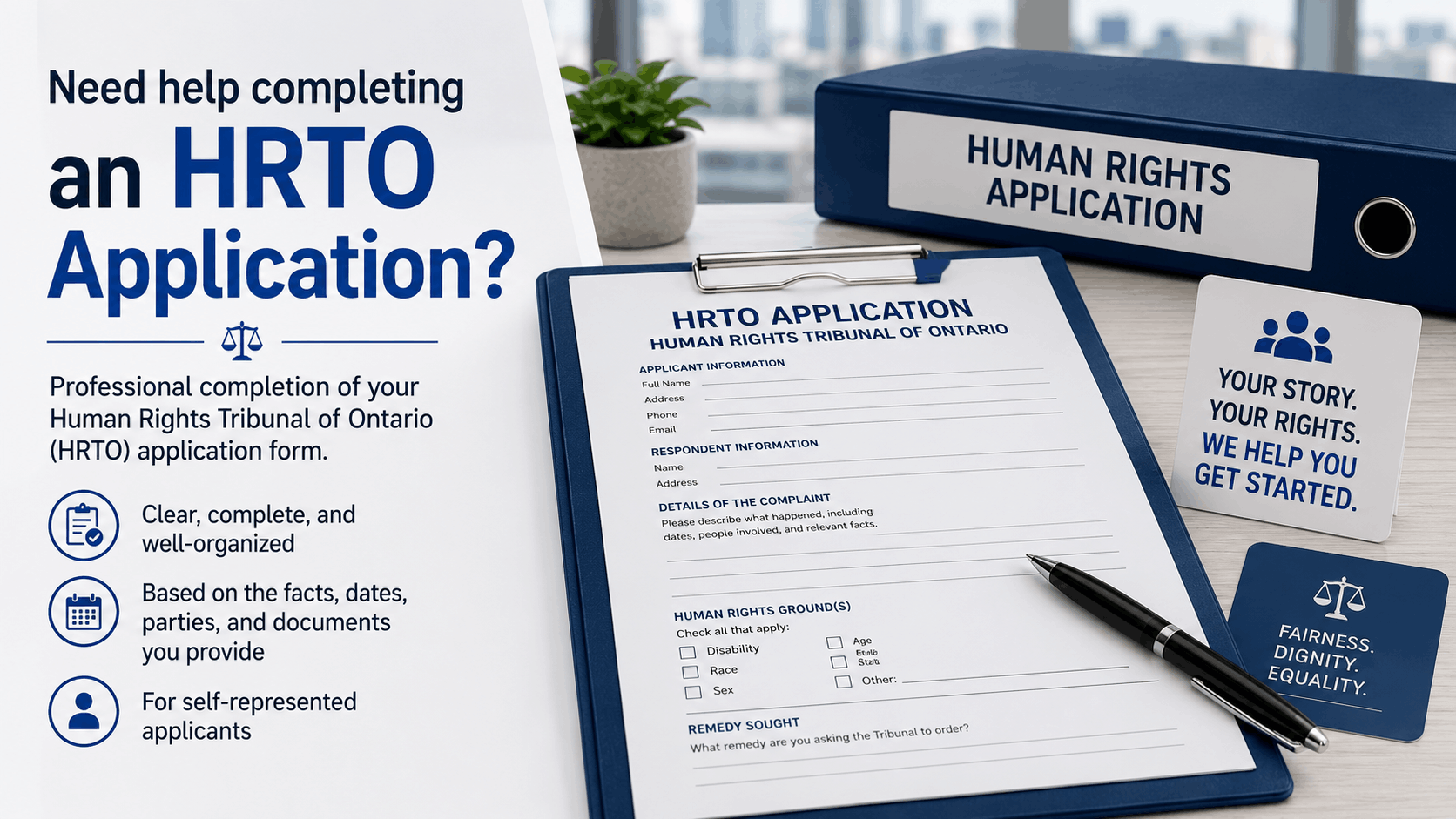
An HRTO application is the document a person files when they want to start a human rights claim in Ontario. HRTO stands for the Human Rights Tribunal of Ontario. The Tribunal deals with claims of discrimination and harassment under Ontario’s Human Rights Code.
A person may file an HRTO application if they believe they were treated unfairly because of a protected ground under the Human Rights Code. These grounds include things like disability, race, sex, age, family status, marital status, religion, place of origin, sexual orientation, gender identity, and other protected personal characteristics.
The discrimination also has to connect to an area covered by the Human Rights Code. These areas include employment, housing, services, contracts, and membership in certain unions or professional associations. For example, a person may have a human rights claim if they were fired because of a disability, denied housing because of family status, or refused service because of race.
The HRTO application is usually where the person explains what happened, who was involved, when it happened, why they believe it was discrimination, and what remedy they are asking for. The Human Rights Legal Support Centre explains that the application starts the human rights claim and asks the applicant to explain what happened, why they believe it was discrimination, and what they want the Tribunal to order.
This form matters because it is often the first detailed version of the applicant’s story. A clear application can help the Tribunal and the other side understand the claim. A confusing application can make the case harder to follow.
Many people who file at the HRTO are self-represented. This means they do not have a lawyer representing them through the whole case. Some people are comfortable doing the process themselves, but still want help preparing the application form so that the facts are organized clearly before they submit it.
That is where professional form completion can help. The goal is not to invent facts or make the case sound more dramatic. The goal is to take the facts, dates, names, documents, and details provided by the applicant and organize them in a clear way on the form.
The HRTO says that applicants must fully complete the correct forms and include the required details. It also warns that if forms are not fully completed, they may be returned. That is one reason it is important to be careful before filing.
A strong HRTO application should usually tell the story in a clear timeline. It should explain what happened first, what happened next, who said or did what, and how the events connect to a protected ground under the Human Rights Code.
For example, it may not be enough to say, “My employer treated me badly.” The application should explain what the employer did, when it happened, who was involved, and why the applicant believes the treatment was connected to a protected ground, such as disability, race, sex, age, family status, or another Code ground.
The form should also identify the correct respondent. The respondent is the person, business, employer, landlord, organization, or institution the applicant says is responsible for the discrimination. Naming the wrong party can create problems. Sometimes the correct respondent is a company. Sometimes it may be an individual. Sometimes there may be more than one respondent.
Dates are also important. The HRTO will want to know when the events happened. Applicants should try to provide specific dates where possible. If they do not remember the exact date, they may need to give their best estimate and explain that it is approximate.
Documents can also be important. Depending on the case, useful documents may include emails, text messages, letters, workplace records, medical notes, accommodation requests, termination letters, job postings, lease documents, complaint records, or other evidence. However, the applicant should follow the Tribunal’s form instructions about what should and should not be filed at the application stage.
The HRTO updated its main Form 1 in 2023 and created a separate Form 1G for certain applications filed on behalf of another person or group. The Tribunal described the revised Form 1 as shorter, written in plainer language, and designed to ask for less repetitive information. Even with a shorter form, many applicants still find it difficult to explain their case clearly.
One common mistake is writing too much without structure. A person may have a real complaint, but if the application is long, emotional, and disorganized, the main points can get lost. The Tribunal needs to understand the legal issue, not just the frustration behind it.
Another common mistake is leaving out the connection to the Human Rights Code. The HRTO does not deal with every unfair situation. It deals with discrimination and harassment connected to protected grounds and protected areas. A workplace may be toxic, a manager may be rude, or a landlord may be difficult, but the application still needs to explain why the conduct falls under the Human Rights Code.
Another mistake is focusing only on conclusions. For example, saying “I was discriminated against” is a conclusion. The application should also include facts. What happened? Who did it? What was said? What was the decision? What reason was given? Why does the applicant believe the protected ground was a factor?
Applicants should also think carefully about remedies. A remedy is what the applicant is asking the Tribunal to order. This may include money for injury to dignity, feelings, and self-respect. It may also include lost wages, changes to policies, human rights training, or other orders depending on the case.
The remedy section should be realistic and connected to the facts. It should explain what the applicant wants and why. This does not mean the applicant is guaranteed to receive what they ask for. It simply helps define the claim.
An HRTO application is not the whole case. It is the starting point. After the application is filed, the respondent may be required to respond. The matter may proceed through steps such as mediation, hearings, decisions, reconsideration requests, or judicial review, depending on what happens. The HRTO’s process information explains that the application and hearing process includes filing, response, reply, mediation, hearings, decisions, and other possible steps.
Because the application is the starting point, it should be prepared with care. A rushed form can create avoidable problems. A well-organized form can help the applicant explain the claim more clearly from the beginning.
Professional help with form completion may be especially useful where the applicant has many dates, many people involved, several documents, a complicated workplace history, medical or disability-related facts, or uncertainty about how to explain the connection to the Human Rights Code.
It may also help where the applicant is nervous about writing, has trouble organizing information, or simply wants the form to look clear and professional before submitting it.
This type of service is especially useful for self-represented applicants. The applicant remains responsible for the facts they provide and for submitting the application, but they receive help turning their information into a more organized form.
The person helping with the form should not guess, exaggerate, or add facts that the applicant did not provide. The application should be based on the applicant’s own information, documents, and instructions. Accuracy matters.
Before seeking help, applicants should gather the key information. This includes the names of the parties, contact information, important dates, a timeline of events, copies of relevant documents, names of witnesses if any, and a clear explanation of what remedy they are asking for.
It can also help to write a short summary in plain language before starting the form. The summary does not have to be perfect. It just helps identify the main story: what happened, when it happened, who was involved, and why the applicant believes it was discrimination under the Human Rights Code.
An HRTO application should be serious, clear, and focused. It does not need to use complicated legal language. In fact, plain language is often better. The goal is to explain the facts in a way that the Tribunal and the respondent can understand.
Flatly.ca offers an HRTO application form completion service for self-represented applicants who want help organizing their application before submitting it to the Human Rights Tribunal of Ontario. This service is designed for people who can provide the facts, dates, parties, and documents, but want professional help completing the form in a clear and organized way.
Legal Disclaimer
This article is for general information purposes only and does not constitute legal advice. It does not create a lawyer-client relationship. Laws and procedures may change. For advice specific to your situation, consult a licensed Ontario lawyer.
Need help with an Ontario legal matter?
Browse transparent flat-fee packages — know the cost before you commit.
Browse All Services